Week of July 18, 2026
From database to knowledge base
The missing infrastructure behind agentic transformation.
More AI, and still no lift
Most organisations now have more AI than ever, and little to show for it. The assistants are capable. What they lack is a shared, current picture of how your organisation actually works.
Three reasons knowledge never sticks
Today most of what an organisation knows lives in one of three forms, and each one leaks.
Tools let it act. Context tells it what matters.
An agent can already see, plan and do. It reaches the web, your files, your inbox. What sits between those actions and everything your organisation knows is the layer most teams are missing.
Agents rarely fail because they lack tools. They fail because they lack context.
Your organisation as a living wiki
An AI Knowledge Base turns the people, sources, concepts, projects and decisions your organisation runs on into linked pages the agent builds, connects and keeps current.
Ask it anything. It answers from your business context, and cites the pages it used.
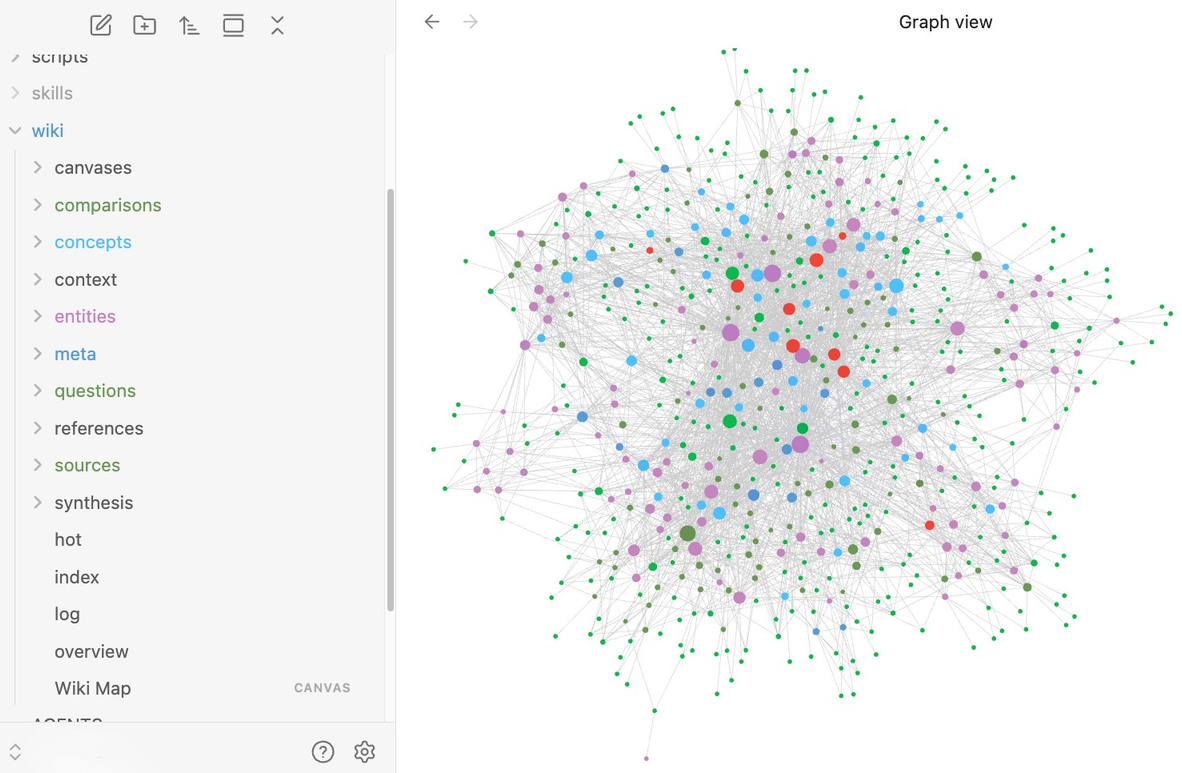
One real example: a single executive's world, organised into a living wiki the agent keeps current.
111
entities
54
concepts
95
sources
300+
linked pages
Knowledge gives facts. Identity gives judgement.
A knowledge base has two parts. One holds what your organisation knows. The other holds how it decides.
Why a wiki beats a database
A database gives you back exactly the rows you ask for. A knowledge base lets you ask open questions, and it keeps getting better at answering them.
What it's actually made of
Two parts do most of the work. One acts on your files. The other is how you see and steer what it writes.
Ingest, link, ask
Day to day, the base runs on a simple loop, driven by repeatable jobs you trigger on command.
A base is only as good as how you shape it
The tools are the easy part. The value comes from what you choose to put in, and keeping it honest.
Keep it current. A knowledge base is a living thing. Its value comes from being shaped and maintained, not from being set up once and left.
Context is the infrastructure, not the model
The advantage in agentic AI is shifting from which model you use to the durable, structured context you give it.